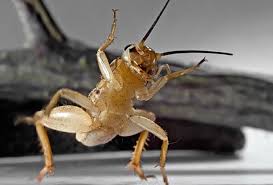
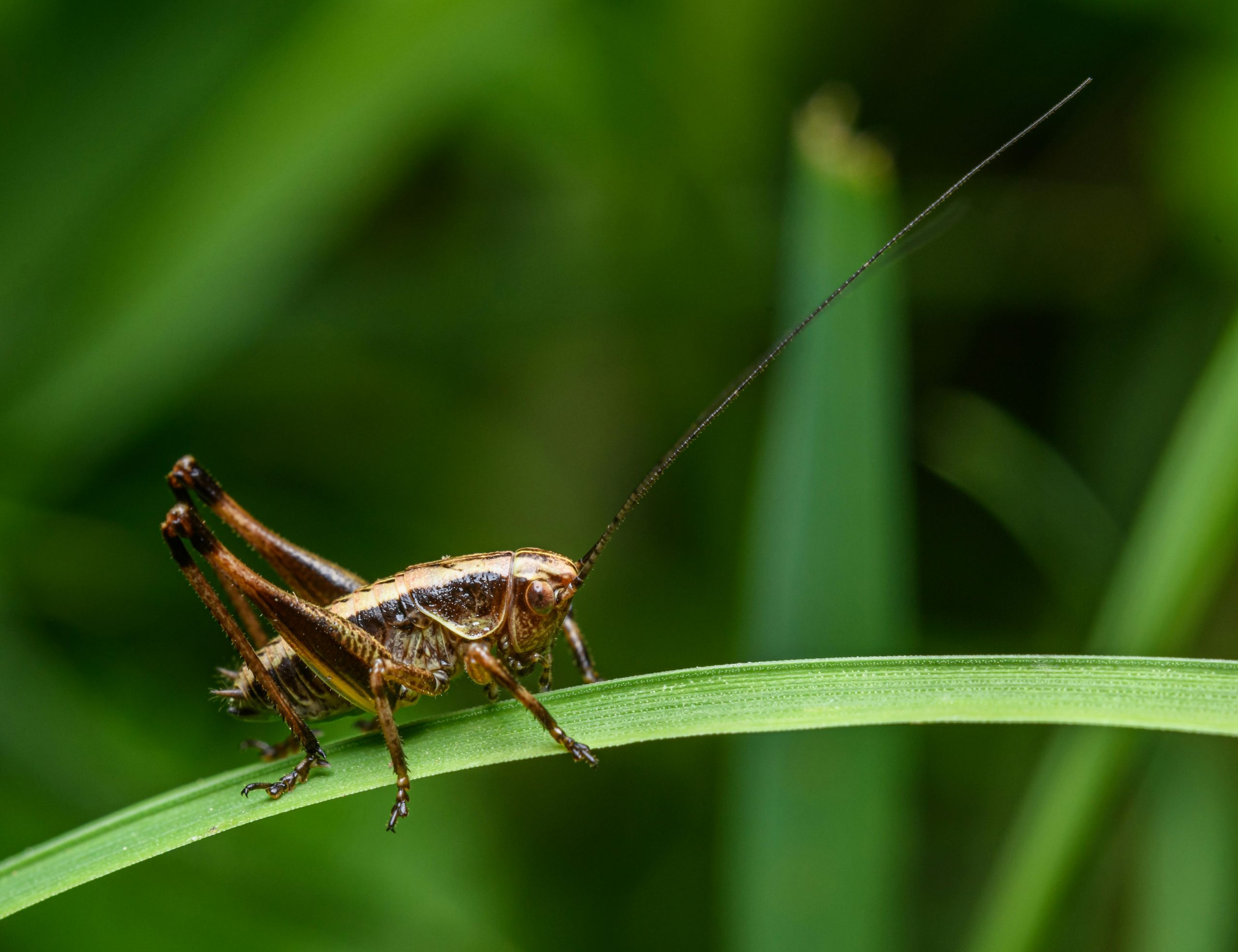
They are already here….
They are here in quieter ways. In the margins of fields, in the cracks of dry earth, in the hum that begins just after sunset. They have always been here, tuning the night to a frequency we pretend not to hear.
We gave them a name that sounds like a sound: crickets.
And then we decided what that meant.
We decided they were background.
We wrote them into silence—into countryside nostalgia, into childhood nights where something small chirps and disappears when you step closer. We made them symbols of absence: so quiet you can hear crickets. A metaphor for nothing happening, for emptiness.
But nothing could be further from the truth.
Because crickets are never doing nothing.
They are eating, always eating—dry leaves, decaying matter, each other if they have to. They are turning waste into muscle, into protein, into something alive that hums in the dark. They are small factories of conversion, running without electricity, without meetings, without grants.
They are, in a very real sense, what food systems used to look like before we complicated them.
What happened is this:
We built a world that pretended food must be large to matter.
Large animals. Large fields. Large silos. Large losses.
And in doing so, we made small things invisible.
We forgot that efficiency does not roar. It chirps.
Crickets eat less, grow faster, need almost no water, and leave behind a fraction of the waste that cattle do. They take what we discard—bran, vegetable scraps, the quiet leftovers of abundance—and return it as something dense and useful.
They do not ask for land we cannot spare.
They do not insist on forests being cut to make room for them.
They simply fit into the spaces we have not yet ruined.
But we have a problem with them.
Not nutritional. Not ecological.
Something older.
We have a problem with the idea that food can crawl.
We inherited a hierarchy.
Things that run are food. Things that fly might be food. Things that swim are sometimes food. But things that crawl – those we hesitate over. We place them closer to decay than to nourishment, closer to discomfort than to sustenance.
We do this even though, for most of human history, insects were simply part of the menu.
Even now, in many parts of the world, they still are—quietly, without apology.
Crickets roasted and salted. Ground into flour. Folded into porridge, into bread, into protein that does not announce itself but simply works.
It is not new.
It is just not what we have chosen to normalize.
And normalization is a powerful thing.
We normalized beef, even as it consumes land and water at scales that strain ecosystems.
We normalized chicken, even as it became something grown faster than nature intended.
We normalized waste – losses along the chain, inefficiencies we no longer notice.
We made these systems feel inevitable.
Crickets, by contrast, still feel like a question.
But listen more carefully.
The question is not whether we can eat crickets.
We can.
The question is why we decided that we shouldn’t.
Because if you strip away the reaction – the instinctive hesitation, the learned discomfort – what remains is a small, efficient organism doing exactly what we need food to do:
Convert low-value inputs into high-value nutrition.
Quietly.
Repeatedly.
At scale.
Without asking for more than it needs.
There is something unsettling about that.
Not because crickets are strange.
But because they are too sensible.
They expose the excess in the systems we built. They make visible the inefficiencies we have learned to ignore. They remind us that food does not have to be this complicated, this resource-heavy, this distant from its origins.
They suggest that the future of food might not be larger, but smaller.
And that is a harder thing to accept.
So we keep them in the background.
We let them remain a sound in the night, a symbol of emptiness, a joke about silence.
We do not look too closely at what they are doing.
But they are still there.
Eating what we waste.
Growing where we do not look.
Turning the edges of our systems into something useful.
Waiting, in the quiet, for us to notice.
Or not.
It doesn’t matter to them.
They will keep going either way
Discover more from Insect Hunter
Subscribe to get the latest posts sent to your email.